
1
/
of
1
Longfin Albino Bushynose Pleco - Sm
Longfin Albino Bushynose Pleco - Sm
Regular price
$19.99 USD
Regular price
Sale price
$19.99 USD
Shipping calculated at checkout.
Quantity
Couldn't load pickup availability
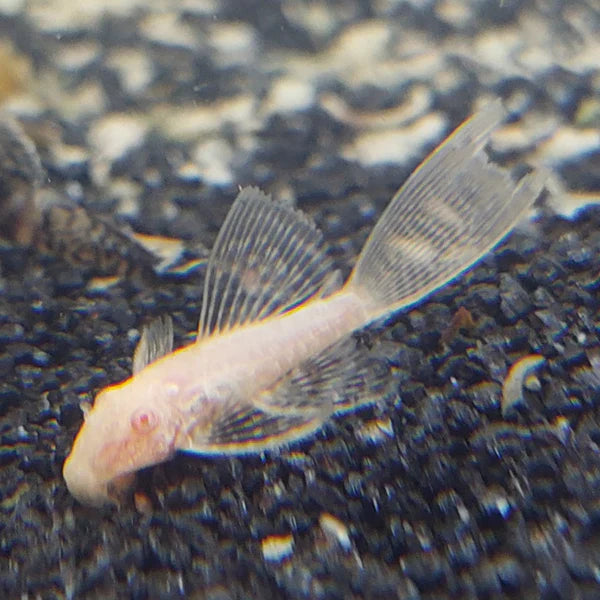
The albino longfin bushynose pleco (Ancistrus sp.) is a popular, peaceful, and hardy freshwater aquarium fish known for its unique appearance, which includes a pale, creamy-yellow body, distinctive red or pink eyes, and long, elegant, flowing fins. They are also called the longfin albino bristlenose pleco.
Key Characteristics
- Appearance: This fish has an albino coloration, ranging from white to a pale yellow or lemon hue, contrasted by red eyes. The "longfin" variant has selectively bred, veil-like pectoral and caudal fins that flow gracefully. Its common name comes from the fleshy, whisker-like appendages (bristles) that develop on its snout as it matures, which are more pronounced and extensive in males.
- Size: Unlike common plecos that can grow very large, this species is a dwarf pleco, typically reaching an adult size of only 6 to 9 inches, making it suitable for a wider range of home aquariums.
- Temperament: Generally a peaceful bottom-dweller, it is an excellent addition to most community tanks. Males can be somewhat territorial with other males of the same species, but this is manageable with plenty of hiding spaces. They are mostly nocturnal but will become active during the day if the tank has sufficient cover.
- Diet & Algae Control: It is a very effective and constant algae eater, actively grazing on glass, rocks, and driftwood. While its diet is primarily herbivorous, it is an omnivore and requires supplemental feeding with high-quality sinking algae wafers, blanched vegetables (like zucchini, cucumber, and spinach), and occasional protein sources such as bloodworms.
- Habitat Needs: The albino longfin bushynose pleco thrives in well-aerated aquariums with plenty of hiding places, such as caves, rockwork, and driftwood, which also serve as an important source of biofilm for their digestion. A minimum tank size of 20 to 30 gallons is recommended.
Share