
1
/
of
1
Black Ruby Barb
Black Ruby Barb
Regular price
$4.99 USD
Regular price
Sale price
$4.99 USD
Shipping calculated at checkout.
Quantity
Couldn't load pickup availability
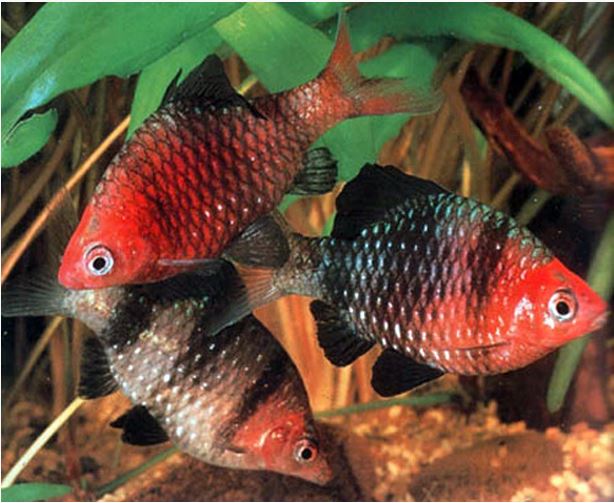
The black ruby barb (Pethia nigrofasciata) is a small, active, and colorful freshwater fish endemic to the forested streams of Sri Lanka. It is a popular and generally peaceful species in the aquarium hobby, known for its vibrant appearance and lively schooling behavior.
Physical Description
- Size: Adults typically grow to a maximum length of 2 to 3 inches (5-7.6 cm).
- Coloration: Juveniles are a yellowish-gray color with three prominent black vertical bands running down their body.
-
Sexual Dimorphism:
- Males develop a stunning, deep ruby-red to purplish-red body and head as they mature, especially during breeding periods. Their entire dorsal fin becomes a deep black, and their anal and pelvic fins are a blackish-red or purple.
- Females retain a paler, more yellowish or silver-gray body color with black accents at the base of their vertical fins and have a rounder belly.
- Body Shape: It has a typical high-backed barb shape, similar to a tiger barb, but without the feelers (barbels) around the mouth that some other barb species possess.
Behavior and Habitat
- Social: Black ruby barbs are social, schooling fish and should be kept in groups of at least six, or preferably more, to reduce stress and encourage their natural behavior. In groups, they are less likely to nip the fins of other tank mates.
- Activity: They are active swimmers and will occupy the middle and upper levels of the aquarium.
- Natural Habitat: They originate from cool, shady, slow-moving forest streams in Sri Lanka with sand or gravel substrates and plenty of vegetation.
- Diet: The fish are omnivores, feeding primarily on filamentous algae and detritus in the wild. In aquariums, they accept a varied diet of high-quality flakes, pellets, and live or frozen foods like bloodworms and brine shrimp.
Due to over-collection and habitat loss in their native range, wild populations are considered vulnerable, and all specimens in the aquarium trade today are commercially bred.
Share